Table of Contents
Managing short-term rentals stops being simple the moment you scale beyond a few properties. Multiple revenue streams, different occupancy patterns, and rising costs quickly make financial visibility harder to maintain. This is where income reporting using management software becomes essential, not optional.
A large-scale study of 2,196 short-term rental units managed by professional property managers in Madrid shows why managers using a centralized data and reporting system achieved higher occupancy rates and generated more monthly revenue, even when their properties had fewer amenities. Better financial oversight led to better decisions, not just better listings.
As portfolios grow, relying on spreadsheets and manual updates limits clarity. Modern reporting software turns fragmented financial data into consistent financial reports, giving each business a single platform to understand performance, spot trends, and act with confidence.
Software for when property and financial reports need to be accurate
When short-term rental operations scale, accuracy stops being a “nice to have.” It becomes the difference between knowing you’re profitable and thinking you are. This is exactly where software-based financial reports outperform manual methods.
What this software must cover
- Centralized financial data across listings, months, and channels
- Separation of revenue, variable costs, and fixed costs
- Reliable tracking of fees (cleaning, platform commissions)
- Cashflow, breakeven, and net income visibility
- Cloud-based access so reports stay updated and consistent
Why manual financial reporting fails in short-term rentals
Common errors
- Mixing gross revenue with payouts after platform fees
- Missing variable costs that scale with occupancy (cleaning, consumables)
- Tracking bookings but not true profitability
- Delayed updates across spreadsheets and tools (poor tracking)
Risks of inaccurate reporting
- Believing a unit is profitable when it’s still below breakeven
- Pricing decisions are made on revenue instead of contribution margin
- Cashflow surprises despite “full” calendars
- Inability to compare properties consistently in the cloud
Operational data vs. consolidated financial data
- Operational data
Nights booked, occupancy rate, average nightly price, stays per month - Consolidated financial data
Adjusted revenue, total expenses, net income, cash flow, and breakeven timing
The same unit can show strong occupancy and still lose money in early months. Only consolidated financial reports reveal when a property truly crosses breakeven (in this case, month 2) and stabilizes at predictable net income.
Thousands of hosts and property managers are transforming how they report and operate
As portfolios scale, successful operators shift from reactive bookkeeping to structured financial reporting. The focus is no longer just on tracking income, but on understanding performance across properties.
What changes with the right platform:
- Greater scalability without adding manual workload.
- Clear control over costs, margins, and net income.
- Increased trust in data used for pricing and investment decisions.
| What hosts need | What modern platforms provide |
| Clear monthly performance | Automated financial reporting |
| Portfolio-level visibility | Consolidated dashboards |
| Fewer errors | Centralized data management |
| Faster decisions | Real-time insights |
Stop scrambling, start strategizing
High-performing operators don’t analyze properties one by one. They compare performance across portfolios, using consistent indicators to guide decisions.
Models like the IVVP framework show how structured financial reporting makes patterns visible:
- Properties with similar values can deliver very different ROI.
- Net operating income and cash-on-cash returns vary widely depending on cost control and pricing.
- Ranking assets side by side highlights which properties truly drive portfolio performance.
When financial reporting is accurate and centralized, hosts move from reacting to monthly results to strategically allocating capital, adjusting pricing, and scaling with intention.
This is the shift from managing listings to managing a business.
Automate reporting for accuracy
In short-term rentals, most reporting errors don’t come from complex calculations, but from fragmented inputs. When bookings, fees, and expenses are tracked manually, small inconsistencies accumulate fast.
Automating reporting with financial reporting software reduces risk by:
- Centralizing tracking of revenue, fees, and expenses in one place.
- Eliminating manual data transfers between tools and spreadsheets.
- Aligning operational activity with actual financial outcomes.
Because data is processed consistently in the cloud, results are reproducible and auditable. This improves confidence in numbers used for forecasting, pricing, and portfolio evaluation, especially when comparing performance across multiple properties.
A structured reporting solution ensures that what you see reflects what actually happened, not what was manually reconstructed at the end of the month.
Retain operational efficiency as you scale
As portfolios grow, complexity increases faster than revenue. What works for one or two listings often breaks down at scale.
A centralized platform helps preserve efficiency by standardizing how data moves through the business:
- Reusable workflows reduce repetitive manual tasks.
- Built-in features keep operational and financial data aligned.
- Consistent reporting across properties enables fair comparisons.
| Manual reporting | Management software |
| Multiple spreadsheets | Centralized platform |
| Manual reconciliation | Automated calculations |
| Delayed updates | Near real-time tracking |
| Property-by-property view | Portfolio-level visibility |
This structure allows teams to scale without sacrificing control or accuracy.
Drive smarter decisions across your portfolio
Accurate reporting is only valuable if it informs decisions. When data is consistent, operators can deliver key insights across properties instead of reviewing results in isolation.
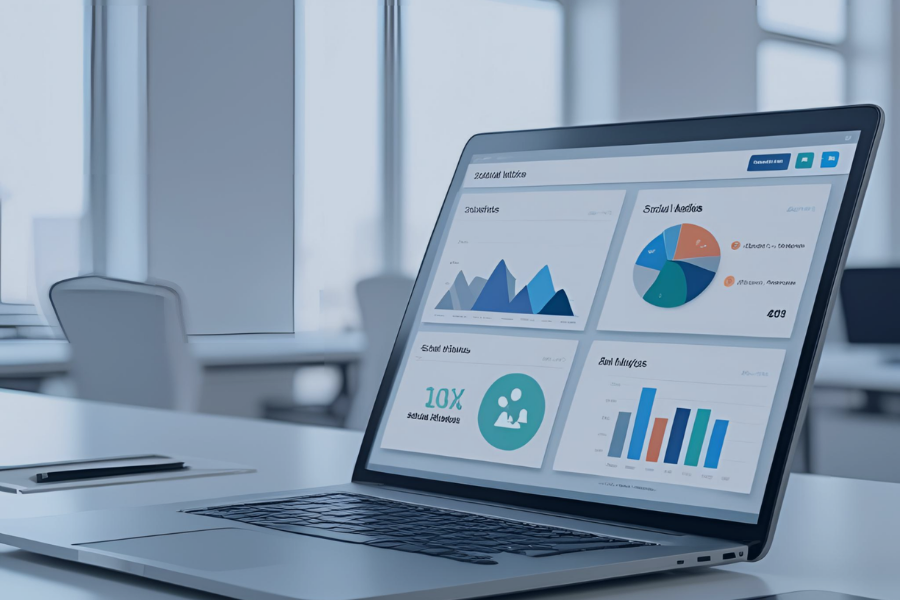
By being able to visualize your financial data, patterns emerge:
- Why similar properties generate different returns.
- How cost structures affect net performance.
- Which assets consistently outperform portfolio averages?
Clear financial visibility connects reporting to action. It turns raw financial data into a practical input for pricing, investment allocation, and long-term profitability across the entire portfolio.
Every report, every insight, one platform
When reporting is fragmented, insights lose reliability. Centralizing reports inside a single platform creates a clear “one source of truth”, where operational activity and financial data stay aligned. Instead of reconciling multiple versions of the same numbers, teams work from shared, consistent reports that support faster analysis and stronger decision-making across the portfolio.
Answer questions using reliable, real-time data
Accurate financial reporting depends on continuous tracking, not end-of-month reconstruction. When data flows through the cloud, performance can be reviewed as it happens. This allows operators to understand how income is evolving during the month, how costs compare to revenue in real time, and which property is delivering the strongest returns without relying on delayed summaries or manual checks.
Flexible implementation with fast operational value
A modern platform delivers value quickly by fitting into existing operations instead of replacing them entirely. With flexible features and optional API connectivity, onboarding can remain lightweight while still enabling integrations with tools such as Xero or QuickBooks Online when needed. This approach supports gradual adoption, allowing teams to improve visibility and control without disrupting day-to-day workflows.
Report faster, manage smarter, and unlock better insights
When reports are generated faster, teams stop reacting late and start planning. Smarter management comes from having consistent financial and operational data in one place, while better insights allow operators to understand performance across properties, owners, and time periods without manual reconciliation. The result is clearer visibility, stronger control, and decisions backed by real numbers.
A Guide to Automating Financial Reporting for Short-Term Rentals
Automating financial reporting helps short-term rental operators replace manual spreadsheets with structured, consistent data. The goal is not complexity, but clarity: faster reports, fewer errors, and a reliable view of portfolio performance as operations scale.
The Property Manager’s Guide to Financial Automation
Financial automation connects operational activity with financial outcomes. By reducing manual inputs and reconciliation, property managers gain more time to analyze results and make decisions instead of fixing numbers.
Owner Reporting: Delivering Clear, Trusted Performance Insights
Clear owner reporting builds trust. When performance insights are consistent, timely, and easy to understand, owners can see how their properties are performing without needing explanations or follow-up adjustments.
Trusted management reporting software, aligned with trusted integrations
A modern management reporting software running on a cloud platform provides the reliability and flexibility that short-term rental businesses need as they grow. By aligning reporting with trusted integrations, data flows remain consistent across systems, manual adjustments are reduced, and financial oversight stays accurate even as portfolios scale. This creates a reporting foundation that operators can trust day after day.
Connect with trusted accounting and finance tools
Connecting operational data with finance systems ensures accurate financial statements and reduces reconciliation effort. Integrations with tools like Xero help keep reporting consistent while maintaining a clean separation between daily operations and accounting workflows.
Reviews show hosts and managers value clear reporting and automation
What users consistently value:
- Clear reports that are easy to share and understand.
- Reliable tracking across properties and time periods.
- Better visibility into cost drivers without manual follow-ups.
Discover a platform uniting operations, reporting, and financial visibility
When a portfolio grows, income reporting using management software becomes a must-have to maintain clarity and control. The best platform helps transform raw data into reliable financial insights, supporting scalable operations and more confident decision-making across the business.